How Jumping from Blenders to Bookmarks Secretly Turns You Into a Better Problem-Solver
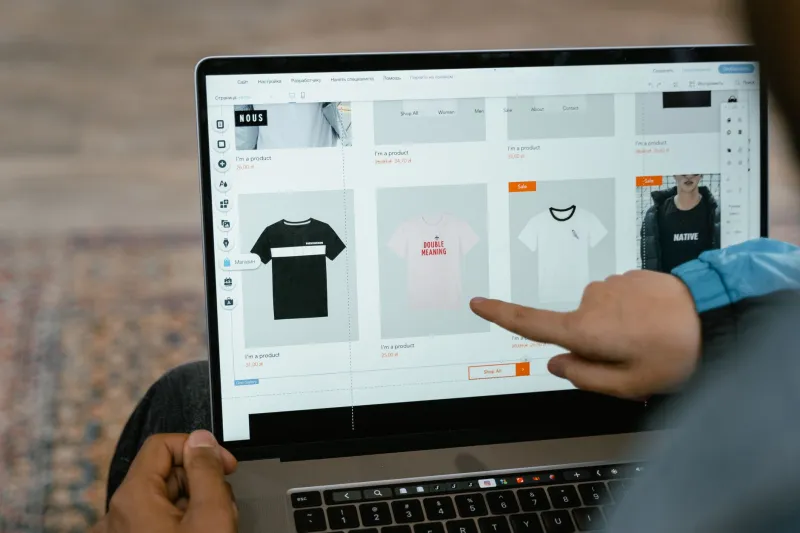
Picture this: you open up a marketplace looking for a new phone case, and forty-five minutes later you've wandered through outdoor furniture, vintage-style wall clocks, resistance bands, and a surprisingly deep rabbit hole of artisan hot sauces. Sound familiar? Most of us chalk that up to distraction — something to feel a little guilty about. But a growing body of research suggests that kind of mental wandering across totally unrelated product categories might actually be one of the better workouts you're giving your brain all day.
Welcome to what some researchers are starting to call the "bazaar effect" — the idea that navigating a sprawling, mixed-inventory marketplace trains your mind to think laterally, draw unexpected connections, and approach problems from angles you'd never have considered otherwise.
What's Actually Happening in Your Brain When You Browse Across Categories
Dr. Melanie Chu, a cognitive psychologist based in Chicago who studies consumer behavior and creative cognition, puts it this way: "When you shift your attention from, say, evaluating a kitchen gadget to comparing camping gear, your brain has to rapidly recalibrate its evaluation criteria. You're not just looking at different products — you're switching entire mental frameworks. That kind of cognitive flexibility is genuinely valuable, and it's a skill that transfers."
The technical term researchers use is associative thinking — the ability to link concepts that don't obviously belong together. It's the same mental muscle behind a lot of creative breakthroughs, from product innovation in Silicon Valley to the kind of lateral problem-solving that helps a teacher figure out a new way to explain fractions or a small business owner pivot their marketing strategy on the fly.
The thing is, most of us don't get many natural opportunities to practice it. We work in specialized fields, socialize in familiar circles, and consume media tailored tightly to our existing interests. A big, everything-under-one-roof marketplace is one of the few places modern life regularly throws genuinely unrelated information at us in quick succession — and our brains respond by getting more nimble.
Real Shoppers, Real Breakthroughs
Ask around, and you'll find more than a few people who've had this exact experience without ever having a name for it.
Tamara L., a 38-year-old graphic designer from Austin, Texas, describes a moment that stuck with her. "I was shopping for storage solutions for my home office, and I ended up in the pet supplies section looking at these modular cage panels people use to build custom enclosures for rabbits. I thought, wait — those are basically the same concept as the pegboard system I'd been trying to design for my studio wall. I ended up rigging together a display system for my design samples that cost about a third of what the 'official' product would have."
That's associative thinking in action: a solution from one domain solving a problem in a completely different one. Tamara didn't go looking for a design hack. She found it by wandering.
Marcus D., a 45-year-old project manager in Atlanta, tells a similar story. "I was browsing fitness gear and I started reading about how coaches structure progressive overload training programs — basically, small incremental increases over time. I had a lightbulb moment about a workflow problem I'd been struggling with at work. I restructured my team's project milestones using the same logic and it genuinely worked better than anything I'd tried before."
The Marketplace as Mental Gym
Dr. Priya Nair, a researcher at a behavioral economics lab in Boston, has been studying how the structure of online marketplaces influences cognitive patterns. "The traditional retail model — go to the hardware store, buy a hammer, leave — is efficient but cognitively narrow," she explains. "When you browse a marketplace that mixes hardware with housewares with hobby supplies, you're essentially doing cross-training for your brain. You're building what we call 'cognitive range' — the ability to draw on a wider repertoire of concepts when you're trying to solve a problem."
She notes that this is part of why some of the most creatively productive people throughout history have been voracious, wide-ranging readers and learners. "The modern equivalent might be the person who genuinely enjoys wandering through a big online marketplace without a strict list. They're exposing themselves to a huge variety of human ingenuity — every product represents someone solving a problem — and that exposure accumulates."
How to Browse With Intention (Without Losing the Magic)
None of this means you should spend your whole afternoon clicking through categories and calling it personal development. But there are a few simple habits that can help you get more mental mileage out of your browsing sessions.
Let yourself follow curiosity sideways. If something in a completely unrelated category catches your eye, don't skip it. Click through and ask yourself: what problem is this product solving? How did someone come up with this? That small act of reflection is where the real cognitive benefit lives.
Notice when categories borrow from each other. A lot of product innovation happens when someone applies a concept from one industry to another. Spotting those cross-pollinations — like the way cable management solutions from IT gear started showing up in home office furniture — sharpens your eye for analogical thinking.
Keep a running note of unexpected connections. It sounds a little nerdy, but jotting down "this reminded me of that" moments while you browse can be surprisingly useful. Over time, you start to see patterns in how your own mind makes connections, which makes it easier to do it deliberately when you actually need a creative solution.
Mix up your starting point. If you always open a marketplace and head straight to the same two or three categories, try starting somewhere unfamiliar on purpose. Even five minutes in a section you'd normally scroll past can surface ideas you wouldn't have found otherwise.
The Bigger Picture
There's something quietly remarkable about the fact that the same platform where you grab dish soap and replacement earbuds might also be subtly sharpening your ability to think through a tricky conversation with your boss or come up with a creative fix for a leaky garage shelf.
At ShopBazaar, we've always believed that having everything in one place is more than just convenient — it's genuinely enriching in ways that aren't always obvious. The bazaar, in its oldest form, was never just a place to buy things. It was a place where worlds collided, where a spice merchant stood next to a textile seller who stood next to a toolmaker, and where the people who wandered through all of it came away with a broader view of what was possible.
Your cart might be full of completely random stuff. But your brain? It's keeping receipts.