Once Hard to Find, Now Just a Search Away: How Online Marketplaces Brought Specialty Shopping to Main Street America
Photo: QueenCityCebu, CC BY-SA 4.0, via Wikimedia Commons
Ask anyone who grew up in a small Midwestern town about specialty shopping, and you'll probably hear a version of the same story. If you wanted authentic Japanese pantry ingredients, a hand-thrown ceramic mug from a local artisan, or a niche piece of tech that hadn't hit big-box stores yet, your options were limited: drive to the nearest major city, know someone who could ship you something, or just go without.
That reality has shifted dramatically over the last decade — and all-in-one online marketplaces deserve a significant share of the credit.
What was once a fragmented, geography-dependent experience has been quietly consolidated into something that looks a lot like a global bazaar accessible from a couch in rural Nebraska or a studio apartment in suburban Georgia. The implications for American shoppers are bigger than they might appear on the surface.
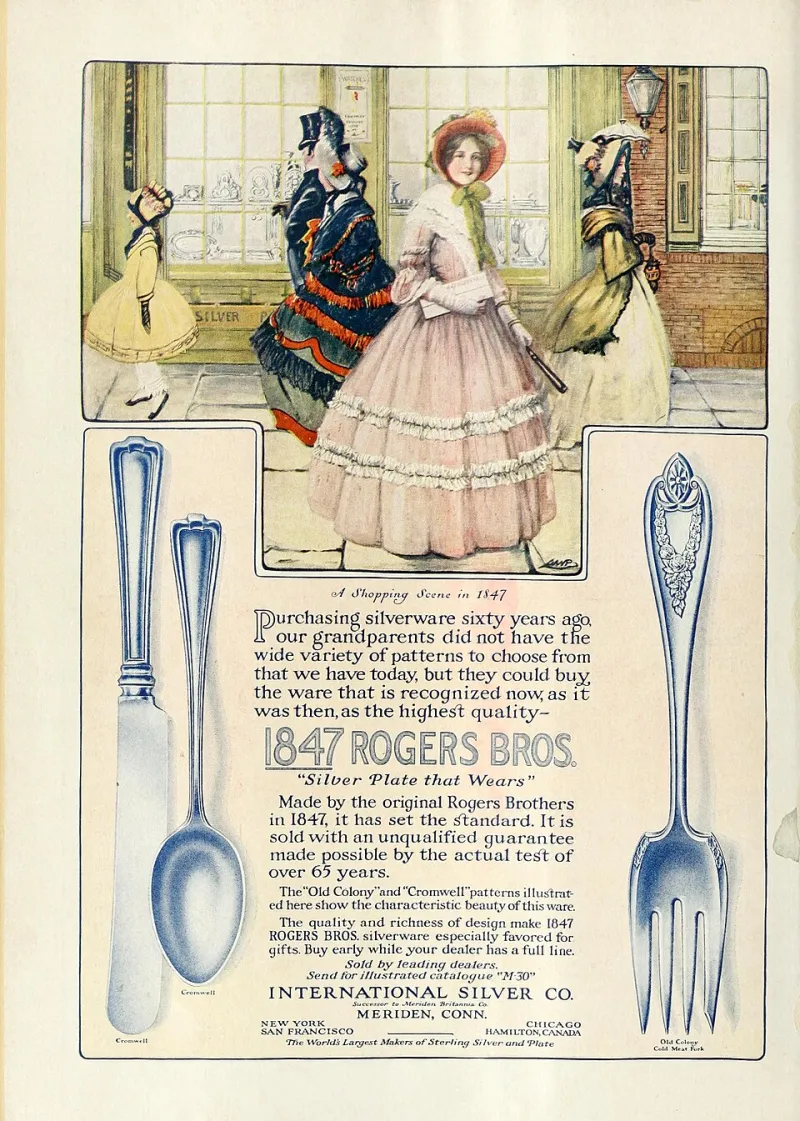
The Old Geography of Specialty Retail
Specialty retail in the US used to follow a pretty predictable map. If you lived in or near a major metro area — New York, Los Angeles, Chicago, Houston — you had access to specialty grocers, import shops, independent artisan markets, and boutique tech retailers. The density of those cities supported niche businesses in ways that smaller markets simply couldn't.
For the roughly 60 million Americans living in rural areas, and the many millions more in smaller suburban communities, the selection at a local mall or strip center was often the ceiling. You could find what most people wanted. What you specifically wanted was a different story.
This wasn't just an inconvenience — it created real gaps in consumer experience that reinforced the idea that specialty products were inherently premium, exclusive, or aspirational. Things for "other kinds of shoppers," not everyday people.
How Consolidated Marketplaces Changed the Equation
The rise of massive all-in-one marketplaces fundamentally disrupted the geography of specialty retail. When a single platform can host thousands of independent sellers — including small artisan studios, international importers, boutique electronics brands, and regional food producers — the physical distance between a shopper and a niche product collapses.
A woman in Bozeman, Montana can now order hand-poured beeswax candles from a small-batch maker in Vermont, Korean cooking sauces that used to require a trip to an H Mart three hours away, and a mechanical keyboard kit that previously would have required navigating obscure hobby forums and waiting months for a group buy. All in one cart, all delivered to the same address.
That shift isn't just logistical. It's cultural. When specialty products become consistently accessible, they stop feeling special in the exclusionary sense and start feeling simply like options — things that exist in the world and that you can reasonably choose to buy.
The Algorithm as Curator
One of the less-discussed engines behind this democratization is recommendation technology. The algorithms that power large online marketplaces don't just help you find what you're looking for — they actively surface things you didn't know to look for.
For specialty and niche products, this is transformative. A shopper who searches for "coffee" and ends up discovering a small-batch Ethiopian single-origin roast from an independent seller wasn't going to stumble across that product in a traditional retail environment. The algorithm essentially acts as a knowledgeable friend who says, "Hey, given what you seem to like, you might want to check this out."
Retail analysts at firms like Forrester and McKinsey have noted that recommendation-driven discovery is disproportionately beneficial for smaller, niche sellers who lack the marketing budgets to compete for attention through traditional advertising. Getting surfaced alongside mainstream products on a major marketplace platform gives them exposure that simply wasn't possible in the old retail model.
Shopper Stories: Finding the Unexpected
Talk to regular marketplace shoppers and you'll hear a consistent theme: the discovery of something they didn't know they could find so easily.
Take Marcus, a home cook in suburban Dallas who started exploring Korean and Japanese cooking techniques during the pandemic. "I assumed I'd have to order from specialty sites, pay high shipping, wait forever," he said. "But I found most of what I needed on a regular marketplace. Gochujang, mirin, a proper donabe pot — all in one order." He's now a regular buyer of international pantry staples that he'd previously considered inaccessible.
Or consider Priya, a graphic designer in Columbus, Ohio who started making her own jewelry as a side hobby. Through an all-in-one marketplace, she found specialty tools, gemstone beads from international suppliers, and professional-grade findings that she'd assumed were only available through trade accounts. "I thought this stuff was for people who already had industry connections," she said. "Turns out it was just a search away."
These aren't edge cases. They're representative of a broad consumer shift happening quietly across the country.
Changing Expectations, For Good
Perhaps the most significant long-term consequence of this accessibility shift is what it's done to shopper expectations. Once you've experienced the ease of finding a niche product through a consolidated marketplace, the old model — where specialty equaled scarcity — starts to feel archaic.
American consumers, particularly younger ones, increasingly expect that if a product exists, they should be able to find it, buy it, and receive it quickly. The marketplace model has made that expectation feel reasonable rather than entitled. And retailers — both large and small — are responding to it.
Small artisan sellers who once relied exclusively on craft fairs and local boutiques are building marketplace storefronts because that's where the audience is. International brands looking to enter the US market are listing on consolidated platforms as a first step rather than a last resort. The ecosystem is self-reinforcing: more sellers bring more products, which brings more shoppers, which brings more sellers.
What This Means for Everyday Shoppers
If you haven't fully explored the specialty corners of your favorite all-in-one marketplace, you might be surprised at what's sitting there waiting to be found. The next time you're browsing, try searching for something you've always assumed was hard to find — a regional food specialty, a handmade craft supply, a piece of niche tech hardware. Chances are better than ever that it's already there.
At ShopBazaar, we think that's one of the most genuinely exciting things about the way online retail has evolved. The bazaar was always supposed to be a place where everything showed up eventually. Now, for American shoppers, it actually is.