From Marrakech to Your Screen: How the Ancient Bazaar Spirit Came Home to Online Shopping
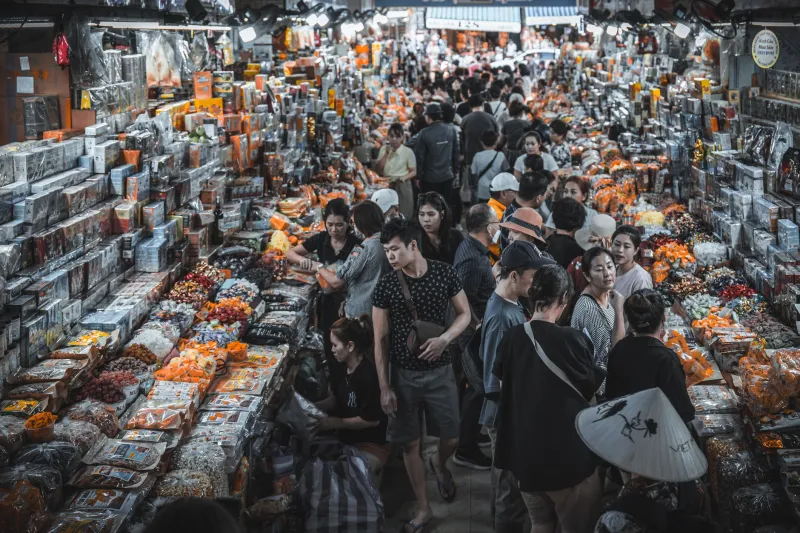
Picture a sprawling outdoor market in Istanbul or a packed souk in Marrakech. Spice vendors next to leather goods sellers. A carpet merchant haggling three stalls down from someone selling handmade jewelry. The noise, the color, the sense that anything could be around the next corner. Now open your favorite all-in-one online marketplace and start scrolling. Gardening tools. Bluetooth speakers. A cashmere sweater. Artisan hot sauce.
Sounds familiar, right?
There's a reason that feeling resonates so deeply — and it goes back a lot further than the internet.
The Original Everything-Store
For most of human history, the bazaar wasn't just a place to shop. It was the center of civic life. Ancient Persian bazaars, Ottoman grand markets, and the open-air mercados of colonial Latin America all served the same essential function: they brought together an almost absurd variety of goods under one loose roof and let people wander, compare, discover, and connect.
The genius of the bazaar format wasn't efficiency. It was serendipity. You went in for olive oil and came out with a hand-stitched bag you didn't know existed an hour earlier. That unplanned discovery wasn't a bug — it was the whole point.
Fast forward a few thousand years, and that same dynamic is alive and thriving on your laptop screen.
Why Variety Creates a Sense of Belonging
Here's something that might surprise you: shopping in a space that offers wildly different product categories actually makes people feel more at ease, not more overwhelmed. Behavioral researchers have noted that when shoppers encounter unexpected variety — especially across lifestyle categories — it signals something powerful: this place understands that I contain multitudes.
You're not just a "fitness person" or a "home décor person." You're someone who needs protein powder and a new throw pillow and maybe a novel you've been meaning to read. A marketplace that stocks all three isn't just convenient — it's validating. It reflects the full, complicated, wonderfully contradictory reality of being a modern American consumer.
That's the bazaar effect in action. Traditional markets thrived because they treated shoppers as whole people with diverse, evolving needs. Today's digital marketplaces do the same thing, just with a search bar instead of a winding alleyway.
The Haggling Psychology — Minus the Awkward Negotiation
One of the most psychologically rich features of the traditional bazaar was the haggling ritual. Now, most of us don't want to negotiate the price of a blender at 11 PM in our pajamas. But the underlying psychology of haggling — the sense of agency, the feeling that you're an active participant rather than a passive buyer — hasn't disappeared. It's just been redesigned.
Flash sales, coupon codes, price comparison tools, and "customers also bought" suggestions all tap into that same instinct. They give shoppers a sense that they're working the system, finding angles, getting a deal that not everyone else is smart enough to spot. You didn't haggle — but you did wait for the sale, stack a promo code, and choose the bundle option. That's the modern equivalent of walking away from a vendor and coming back with a counteroffer. The satisfaction is remarkably similar.
Discovery as the Real Product
Here's a reframe worth considering: when you shop at a packed online marketplace, the products aren't always the primary thing you're buying. Sometimes you're buying the experience of discovery itself.
This is something traditional bazaar merchants understood intuitively. The layout of a great souk wasn't designed for efficiency — it was designed to maximize the number of things you'd stumble across. Dead ends that turned into unexpected alleys. Stalls that seemed to sell one thing but revealed something entirely different once you got closer.
Online marketplaces replicate this through recommendation algorithms, "trending in your area" sections, and category cross-links that nudge you from kitchen gadgets into outdoor gear into vintage-style home décor before you even realize what happened. That journey — the wandering itself — is pleasurable in a way that a hyper-efficient, single-product search never quite manages to be.
The Community Angle Nobody Talks About
Bazaars were never just transactional. They were social. You ran into neighbors. You got opinions from strangers. You heard about a new product from the person standing next to you at a stall. That social layer gave purchases a kind of community endorsement that made them feel more meaningful.
Online marketplaces have rebuilt this layer through reviews, Q&A sections, and user-generated photos. When you're reading through 847 reviews of a cast iron skillet, you're not just doing research — you're tapping into a crowd of people who bought the thing, used it, and wanted to share their experience. That's a digital recreation of the bazaar's social fabric. A stranger's four-star review with a photo of their Sunday morning eggs is the modern version of the vendor's neighbor vouching for the quality of his goods.
It sounds mundane, but the psychological effect is real. Purchases that feel socially validated feel better. They feel less like isolated decisions and more like participation in a shared culture of taste and discovery.
Why "Everything in One Place" Feels Like Home
There's a reason the phrase "one-stop shop" carries such warm connotations in American culture. It's not just about saving time — though that's obviously part of it. It's about the comfort of a familiar, reliable environment that you can return to again and again with different needs and always find something useful.
The bazaar, at its best, created that feeling of a reliable home base. Merchants knew your name. You knew which stalls carried what. The familiarity reduced anxiety and made the act of shopping feel safe and even pleasurable rather than stressful.
A well-designed online marketplace works the same psychological territory. Your saved addresses, your purchase history, your personalized recommendations — they all add up to a shopping environment that feels like it knows you. And in a world where we're constantly navigating new apps, new interfaces, and new platforms, that sense of a familiar, all-encompassing home base is genuinely valuable.
The Ancient Model That Never Really Went Away
It's tempting to think of online marketplaces as a radically new invention — a product of the digital age with no real precedent. But the more you look at them, the more clearly they reflect a model that humans have been perfecting for thousands of years.
The bazaar figured out something fundamental about how people like to shop: with variety, with serendipity, with a sense of community and discovery, and with the feeling that the space they're in reflects the full complexity of who they are.
Every time you add something unexpected to your cart — something you didn't come looking for but couldn't resist once you saw it — that's not a quirk of modern consumer behavior. That's the bazaar effect, alive and well, doing exactly what it was always designed to do.
And honestly? We're here for it.