When the Digital Bazaar Came to Town: What One-Stop Online Shopping Is Doing to America's Neighborhoods
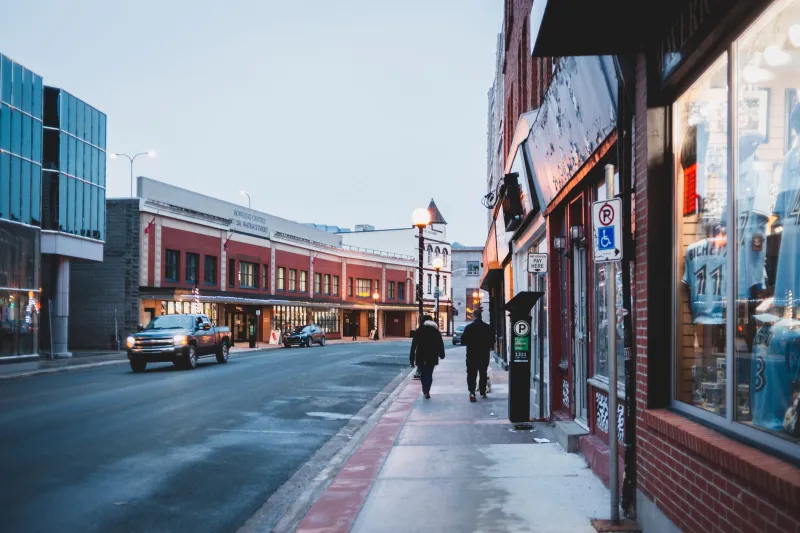
There used to be a rhythm to shopping in America. You went to the hardware store for nails, the boutique for a birthday gift, the pharmacy for aspirin, and the specialty kitchen shop for that one weird pan you needed. Each errand had its own destination. Main Street, in its classic sense, was a collection of specialized stops stitched together by sidewalks and habit.
That rhythm has changed — and not subtly.
The rise of all-in-one online marketplaces has fundamentally altered where Americans expect to find things. And while the convenience angle gets plenty of coverage, the deeper story is about what happens to the places those shoppers used to visit.
The Consolidation Nobody Voted For
It didn't happen overnight, and nobody sent out a memo. But somewhere between the early days of e-commerce and today's era of massive digital marketplaces — where you can buy a ceiling fan, a birthday card, a pair of running shoes, and a bag of coffee beans in a single checkout session — American shopping behavior quietly consolidated.
Retail analysts have been tracking this shift for years, and the numbers aren't subtle. Foot traffic data from retail research firms consistently shows declines in visits to standalone specialty stores, while consumer surveys reveal that a growing share of shoppers now begin and end their product searches on large multi-category platforms. The default has changed. Instead of thinking "where do I go to find this," millions of Americans now think "let me just search for it."
That shift in mental model — from destination-based shopping to search-based shopping — is more consequential than it might sound.
What Main Street Actually Loses
Urban planners and local business advocates have been sounding the alarm about retail vacancies for the better part of a decade. But the conversation often gets framed around Amazon or big-box stores, missing a more nuanced layer: it's not just that shoppers are buying online, it's that they're buying everything in one place online.
When a shopper used to need a specialty kitchen gadget, they might have visited a local cookware shop. That visit generated foot traffic, which benefited the coffee shop next door, which kept the landlord's vacancy rate low, which kept rents manageable for the yoga studio down the block. Retail ecosystems in walkable neighborhoods depend on these chains of proximity.
When that same shopper finds the gadget in thirty seconds on a multi-category marketplace and never leaves the couch, the entire chain breaks. The cookware shop sees fewer browsers. The coffee shop loses a handful of customers. Over time, vacancies creep in. And once a retail corridor starts showing empty storefronts, the psychological effect on remaining shoppers can accelerate the decline.
This isn't speculation — it's a pattern playing out in mid-sized American cities from Akron to Albuquerque.
The Boutique Isn't Dead, But It's Adapting
Here's where the story gets more complicated, and honestly, more interesting. The boutique and specialty retail space hasn't simply collapsed — it's morphing.
Savvy independent retailers have figured out that trying to compete on selection or price against a massive marketplace is a losing game. So they're not playing that game. Instead, many are leaning hard into experience, curation, and community — things a search bar fundamentally cannot replicate.
Think of the record shop that hosts listening parties. The independent bookstore with a robust events calendar. The local kitchenware store that runs cooking classes on weekends. These businesses are essentially redefining what they sell: not just products, but belonging.
It's a real pivot, and it's working for some. But it requires resources, creativity, and a customer base willing to pay a premium for the experience — conditions that don't exist equally across every neighborhood or city.
Urban Planners Are Rethinking the Grid
City planners and economic development officials are also responding, though the solutions vary wildly depending on the municipality.
Some cities are experimenting with zoning changes that encourage mixed-use development — bringing residential units above ground-floor retail to ensure built-in foot traffic regardless of shopping trends. Others are investing in public markets and pop-up retail spaces that give small vendors a low-overhead way to reach local shoppers without the burden of a traditional lease.
There's also growing interest in what some planners call "destination retail" — the idea that if a shopping district can't compete on convenience, it needs to compete on being genuinely worth the trip. Farmers markets, artisan fairs, and curated retail festivals are all expressions of this thinking.
None of these are perfect solutions, and none of them fully replace what's been lost. But they represent a real-time adaptation to a landscape that has shifted beneath the feet of local economies.
The Marketplace Isn't the Villain Here
It's worth pausing to say something that might feel counterintuitive on a site like ShopBazaar: the all-in-one marketplace model isn't inherently bad for communities. It's a tool, and tools take the shape of how we use them.
For shoppers in rural areas or underserved communities without easy access to diverse retail options, centralized online marketplaces have been genuinely democratizing. The ability to find specialty products, compare prices across sellers, and have items delivered without a car or a long drive is a meaningful quality-of-life improvement for millions of Americans.
The tension isn't between online marketplaces and Main Street as enemies. It's a more complex negotiation between convenience and community investment — and most of us are navigating it imperfectly, one shopping cart at a time.
What Shoppers Can Actually Do
If you're someone who shops on large multi-category platforms regularly (and let's be honest, most of us do), there are small, practical ways to stay connected to your local retail ecosystem without giving up the convenience you've come to rely on.
Consider doing a periodic "local first" pass before defaulting to a marketplace search. If you know a local shop might carry what you need, check there first — even if it costs a few dollars more. Think of it as a small investment in the walkability and vitality of your neighborhood.
When you do shop locally, tell people. Word-of-mouth still moves the needle for small retailers in ways that no algorithm can match.
And if a local market, pop-up, or retail event is happening in your area, show up — even if you're not sure you'll buy anything. Foot traffic has value independent of transactions.
The Bazaar Evolved, Not Disappeared
Here's the thing about bazaars: they've always evolved. The original bazaars of the ancient world were chaotic, sprawling, everything-in-one-place experiences — not so different in spirit from the digital marketplaces we navigate today. What's changed is the geography. The bazaar moved online, and the physical spaces it used to occupy are still figuring out what comes next.
That figuring-out process is messy, uneven, and genuinely uncertain. But it's also creative, and in many American cities, it's producing retail experiences and community spaces that are more intentional and more human than what existed before.
The digital bazaar and the local marketplace don't have to be at war. They just need to find their lanes — and shoppers, planners, and business owners are all part of drawing those lines.